OEM vs ODM vs Private Label Skincare: What Business Buyers Should Know
Compare OEM, ODM and private-label skincare sourcing models, including customization, sampling, intellectual property and practical questions to ask a manufacturer.
SHINY-QY EditorialFor Professional Buyers
A practical sourcing guide for professional skincare buyers and brand owners.
Why the sourcing model matters
OEM, ODM and private label are often used interchangeably in skincare sourcing. In practice, these labels can describe different levels of formula ownership, development, packaging work and supplier responsibility. Understanding the arrangement before asking for a quote helps buyers avoid disagreements about cost, lead time and intellectual property.
The right model depends on your starting point. A distributor adding a new label to an existing catalogue may need a different process from a brand owner developing a distinctive texture, ingredient positioning or packaging system.
What does OEM skincare manufacturing mean?
OEM (original equipment manufacturing) generally means a manufacturer makes products to specifications agreed with a business customer. The buyer may supply a formula or product brief, but the actual allocation of development, sourcing, validation and regulatory work varies by contract.
An OEM discussion should identify who owns the formulation, who approves substitutions, which tests are required, whether the proposed manufacturing process can reproduce the specification and who retains any tooling or intellectual property. The term OEM alone does not settle these questions.
What does ODM skincare manufacturing mean?
ODM (original design manufacturing) commonly describes an arrangement where the manufacturing partner contributes product design or formulation development. It can include suggesting ingredient systems, textures, packaging formats and a development path for the buyer’s market.
A buyer should still confirm whether the underlying formula is exclusive, whether other customers can use a similar base, what development fees cover and which deliverables will be supplied at handover. A sample payment does not automatically give the buyer full ownership of the manufacturer’s pre-existing know-how.
How does private label fit in?
Private label often starts with an existing or adaptable product concept and adds the buyer’s brand identity. The supplier and buyer still need to agree the final formula version, packaging, artwork, labelling, order quantities and target-market requirements. Private label does not necessarily mean that every product is identical or that no development is needed.
This model may be attractive when time-to-market and simpler development are priorities. However, lower customization can limit differentiation, and small differences in packaging, ingredients or local compliance requirements can change price and timing.
Key differences to compare before selecting a model
A buyer should request a written project scope rather than rely on a broad OEM or ODM label.
Development scope: ready-made product concept, adapted formula or new development.
Formula and design rights: background IP, new deliverables, exclusivity and permitted repeat orders.
Sampling: number of rounds, sample costs, approval steps and reference standards.
Packaging: standard components, custom moulds, printed cartons, labels and artwork approval.
MOQ and pricing: whether minimum quantities apply to the formula, packaging component or total order.
Compliance: who handles safety assessments, labels, claims and destination-market filings where applicable.
A practical quotation checklist
Send a product category, intended market, desired ingredients or positioning, estimated order quantity, target packaging format, brand artwork status and expected launch window. Ask the supplier to separate formulation, sampling, packaging, testing, production and delivery assumptions.
Before confirming production, ask for a written list of approvals and the conditions that start the lead-time clock. A quote with incomplete packaging or compliance information is usually an estimate, not a final project specification.
Frequently asked questions
Is ODM always more expensive than private label?
Not necessarily. Pricing depends on development work, component selection, testing, order quantity and the commercial agreement. Compare itemized offers rather than assuming a universal ranking.
Can an OEM buyer own the final formula?
Ownership and permitted use depend on the agreed contract and the underlying rights. Specify whether the buyer receives exclusivity, transfer of a newly developed formula or a narrower manufacturing licence.
Is a product automatically approved for sale worldwide?
No. Requirements differ by market and product classification. The parties should identify applicable responsibilities before using claims, labels or registrations in a destination market.
Discuss a skincare project with SHINY-QY
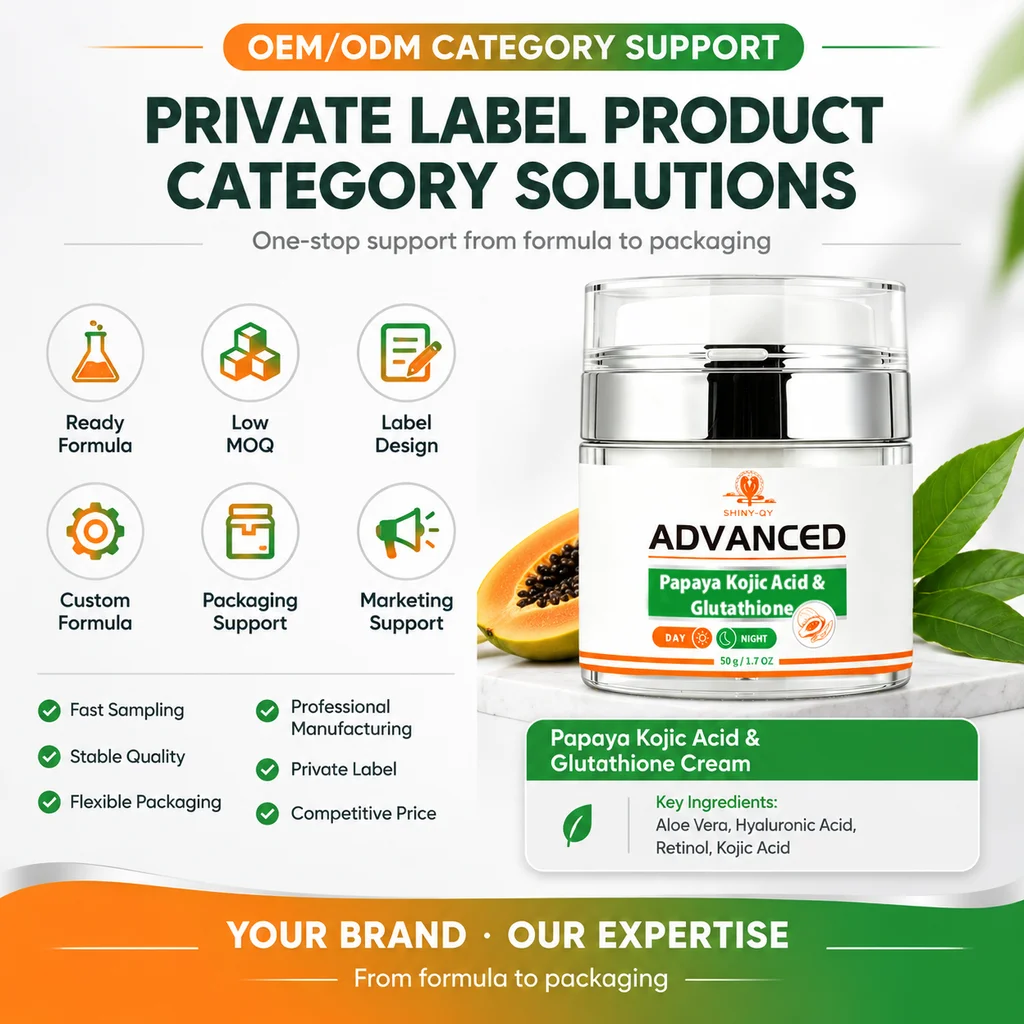
SHINY-QY supports B2B skincare sourcing discussions around product concepts, OEM/ODM specifications and private-label branding. Explore our OEM/ODM service, review the product catalogue, or send a project enquiry with your target market, product category and estimated quantity.
For practical answers on samples, minimum orders, packaging, lead times, compliance responsibilities and quotation requirements, see the SHINY-QY OEM/ODM Buyer FAQ.
Understand why skincare MOQ varies by product formula, bottle and carton selection, custom artwork, sampling and production scheduling, and learn what to confirm before ordering.
A practical B2B checklist for evaluating private-label skincare manufacturers, from formula and packaging samples to quality documents, communication and written order terms.